Halecroft Grange Care Home – Care UK
At a Glance
The information you need to decide whether this home warrants a closer look.
Residential homes
Staff warmth score
of reviewers answered yes
Good to know
- Registered beds95
- SpecialismsCaring for adults over 65 yrs, Caring for adults under 65 yrs, Dementia, Physical disabilities, Sensory impairment
- Last inspected2023-08-25
Save Halecroft Grange Care Home – Care UK to your shortlist
Keep a running list, add visit notes, and compare homes side-by-side. Free account — it takes a minute.
STAGE 4 — RESEARCHING CARE HOMES
Visit homes. Compare them side by side. Choose with confidence.
Most of us will view care homes the way we view houses, impression, atmosphere, the feeling in the corridor. We go home, try to remember what we saw, and make a permanent decision from a blurred memory.

The DCC shortlist gives every home you visit a structured record: the same twelve questions, answered the same way, every time. When you’re ready to choose, pull any two homes side by side and compare them directly. Same criteria, same evidence, your notes and your scores.
The Evidence
What the review data, the inspection reports, and the dementia-care evidence base tell us about this home.
What families say
Families describe staff who remember everyone's names and chat unhurriedly during care tasks. The structured activities programme keeps residents engaged throughout the day, with therapy sessions and social groups that bring people together across different ability levels. Even residents with dementia join mixed activities, preventing the isolation that can happen in separated units.
The eight family priority themes
- Staff warmth88
- Compassion & dignity92
- Cleanliness75
- Activities & engagement85
- Food quality72
- Healthcare75
- Management & leadership90
- Resident happiness82
What inspectors found
Inspected 2023-08-25
Is this home safe?
Is the care effective?
The Effective domain was rated Good at the May 2023 inspection. This covers training, care planning, healthcare access, and nutrition. Dementia is listed as a specialism, which means inspectors would have expected to see evidence of dementia-specific training, but the published summary does not record training content, completion rates, or specific examples of care plan quality. A Good Effective rating means inspectors were satisfied overall but did not find the level of outstanding practice seen in the Caring and Responsive domains. No requirements or recommendations were recorded under this domain.Is this home caring?
The Caring domain was rated Outstanding, the highest possible rating, at the May 2023 inspection. Outstanding Caring ratings are awarded only when inspectors record specific, direct evidence that staff treat people with genuine warmth, protect dignity consistently, and support independence in a person-led way. The published summary does not reproduce the specific observations that underpinned this rating, but the award itself reflects a high evidential bar. The home supports people with dementia, physical disabilities, and sensory impairments, meaning staff kindness must work across a range of complex communication needs.Is the home responsive?
The Responsive domain was rated Outstanding at the May 2023 inspection. Responsive covers activities, individual engagement, how the home responds to changing needs, and end-of-life care. An Outstanding rating here requires inspectors to find evidence of tailored, individual activity provision rather than a generic group-only programme. The home's specialisms include dementia, physical disabilities, and sensory impairments, all of which require adapted communication and activity approaches. The published summary does not record specific activity examples, named coordinators, or end-of-life care detail.Is the home well-led?
The Well-led domain was rated Outstanding at the May 2023 inspection. The registered manager is Suzanna Sumegi and the nominated individual is Rachel Louise Harvey, both named in the registration record. Outstanding Well-led ratings require inspectors to find specific evidence of a positive, open culture, visible leadership, effective governance, and staff who feel empowered to speak up. This is the domain most closely associated with the home's quality trajectory over time: it improved from Good to Outstanding at this inspection, suggesting active, sustained improvement rather than a static performance. No concerns were recorded.
Source: CQC inspection report →
What the evidence base says
The home supports younger adults with physical disabilities alongside older residents, creating a mixed community. They're equipped for sensory impairments and have particular experience with complex dementia care. The dedicated dementia floor provides specialised care while still including residents in whole-home activities where appropriate. Staff training focuses on maintaining dignity and responding to individual needs as conditions progress. All areas worth probing directly during a visit.
The DCC Verdict
Our editorial view, built from the three lenses: what families tell us, what inspectors record, and how the home sits against good dementia-care practice.
DCC Family Score
Halecroft Grange scores 82 out of 100, reflecting an Outstanding overall rating with particularly strong evidence of kind, respectful care and excellent leadership. Scores for cleanliness, food, and healthcare are held back by limited specific detail in the published inspection findings.
Homes in North West typically score 68–82.The three-lens summary
What families tell us
Families describe staff who remember everyone's names and chat unhurriedly during care tasks. The structured activities programme keeps residents engaged throughout the day, with therapy sessions and social groups that bring people together across different ability levels. Even residents with dementia join mixed activities, preventing the isolation that can happen in separated units.
What inspectors have recorded
Staff respond quickly when residents' needs change, arranging assessments and adjusting care without families having to push. The dedicated dementia floor has specially trained teams who provide dignified, individualised support. Communication generally flows well, though one family reported serious concerns about information access and care standards that the home will need to address.
How it sits against good practice
For families navigating that difficult transition from home to residential care, Halecroft Grange offers a stepping stone that preserves independence within a supportive framework.
Worth a visit
Halecroft Grange, at 295 Hale Road in Altrincham, was rated Outstanding at its most recent inspection in May 2023, having improved from Good at its previous assessment. Inspectors awarded Outstanding ratings in three of five domains: Caring, Responsive, and Well-led. Safe and Effective were both rated Good. This is a strong result; fewer than five per cent of care homes in England hold an Outstanding overall rating, and achieving it requires inspectors to find specific, sustained evidence across multiple visits and data sources, not simply good paperwork. The main limitation for families reading this report is that the published inspection summary is brief, and many details that matter most, including night staffing ratios, agency staff use, food quality, outdoor access, and one-to-one activity provision for people with advanced dementia, are not recorded in the published text. The Outstanding ratings give you good grounds for confidence, but they do not answer every question. When you visit, ask to see last week's actual staffing rota (not the template), ask how many permanent staff work on the dementia unit after 8pm, and observe whether staff interactions in corridors are unhurried and use your parent's preferred name.
The three questions to ask when you visitSave this home. Compare it against your shortlist.
Let our analysis show you how Halecroft Grange Care Home – Care UK measures up against the other homes you’re considering. Free account.
In Their Own Words
How Halecroft Grange Care Home – Care UK describes itself — collected from its own website. DCC has not edited or independently verified the content in this tab.
Where hospital-level care meets the comfort of your own flat
Halecroft Grange – Expert Care in Altrincham
When you need more support than home can provide but want to keep your independence, finding the right balance feels impossible. Halecroft Grange in Altrincham offers something different — self-contained flats where residents maintain their own routines while having skilled care just steps away. The home coordinates smoothly with hospitals and adjusts support levels quickly when health changes, giving families confidence during uncertain times.
Who they care for
The home supports younger adults with physical disabilities alongside older residents, creating a mixed community. They're equipped for sensory impairments and have particular experience with complex dementia care.
The dedicated dementia floor provides specialised care while still including residents in whole-home activities where appropriate. Staff training focuses on maintaining dignity and responding to individual needs as conditions progress.
“For families navigating that difficult transition from home to residential care, Halecroft Grange offers a stepping stone that preserves independence within a supportive framework.”
DCC does not edit or curate content in this tab. For independently curated information, see The Evidence and DCC Verdict.
The DCC Verdict
Our editorial view, built from the three lenses: what families tell us, what inspectors record, and how the home sits against good dementia-care practice.
DCC Family Score
Halecroft Grange scores 82 out of 100, reflecting an Outstanding overall rating with particularly strong evidence of kind, respectful care and excellent leadership. Scores for cleanliness, food, and healthcare are held back by limited specific detail in the published inspection findings.
Homes in North West typically score 68–82.The three-lens summary
What families tell us
Families describe staff who remember everyone's names and chat unhurriedly during care tasks. The structured activities programme keeps residents engaged throughout the day, with therapy sessions and social groups that bring people together across different ability levels. Even residents with dementia join mixed activities, preventing the isolation that can happen in separated units.
What inspectors have recorded
Staff respond quickly when residents' needs change, arranging assessments and adjusting care without families having to push. The dedicated dementia floor has specially trained teams who provide dignified, individualised support. Communication generally flows well, though one family reported serious concerns about information access and care standards that the home will need to address.
How it sits against good practice
For families navigating that difficult transition from home to residential care, Halecroft Grange offers a stepping stone that preserves independence within a supportive framework.
Worth a visit
Halecroft Grange, at 295 Hale Road in Altrincham, was rated Outstanding at its most recent inspection in May 2023, having improved from Good at its previous assessment. Inspectors awarded Outstanding ratings in three of five domains: Caring, Responsive, and Well-led. Safe and Effective were both rated Good. This is a strong result; fewer than five per cent of care homes in England hold an Outstanding overall rating, and achieving it requires inspectors to find specific, sustained evidence across multiple visits and data sources, not simply good paperwork. The main limitation for families reading this report is that the published inspection summary is brief, and many details that matter most, including night staffing ratios, agency staff use, food quality, outdoor access, and one-to-one activity provision for people with advanced dementia, are not recorded in the published text. The Outstanding ratings give you good grounds for confidence, but they do not answer every question. When you visit, ask to see last week's actual staffing rota (not the template), ask how many permanent staff work on the dementia unit after 8pm, and observe whether staff interactions in corridors are unhurried and use your parent's preferred name.
The three questions to ask when you visitSave this home. Compare it against your shortlist.
Let our analysis show you how Halecroft Grange Care Home – Care UK measures up against the other homes you’re considering. Free account.
In Their Own Words
How Halecroft Grange Care Home – Care UK describes itself — collected from its own website. DCC has not edited or independently verified the content in this tab.
Where hospital-level care meets the comfort of your own flat
Halecroft Grange – Expert Care in Altrincham
When you need more support than home can provide but want to keep your independence, finding the right balance feels impossible. Halecroft Grange in Altrincham offers something different — self-contained flats where residents maintain their own routines while having skilled care just steps away. The home coordinates smoothly with hospitals and adjusts support levels quickly when health changes, giving families confidence during uncertain times.
Who they care for
The home supports younger adults with physical disabilities alongside older residents, creating a mixed community. They're equipped for sensory impairments and have particular experience with complex dementia care.
The dedicated dementia floor provides specialised care while still including residents in whole-home activities where appropriate. Staff training focuses on maintaining dignity and responding to individual needs as conditions progress.
Management & ethos
Staff respond quickly when residents' needs change, arranging assessments and adjusting care without families having to push. The dedicated dementia floor has specially trained teams who provide dignified, individualised support. Communication generally flows well, though one family reported serious concerns about information access and care standards that the home will need to address.
The home & environment
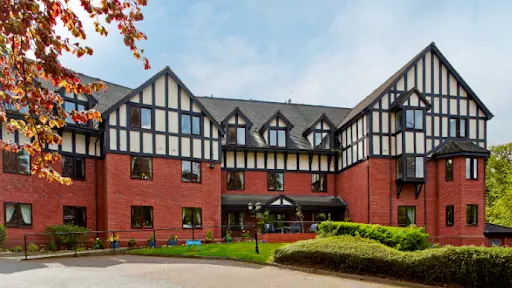
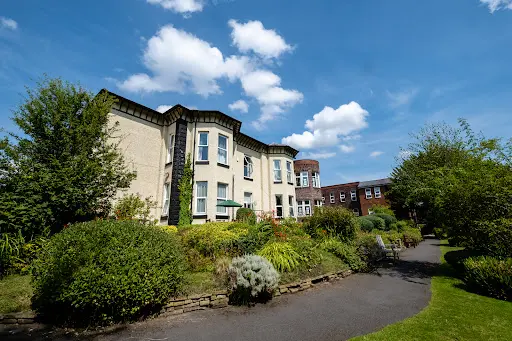
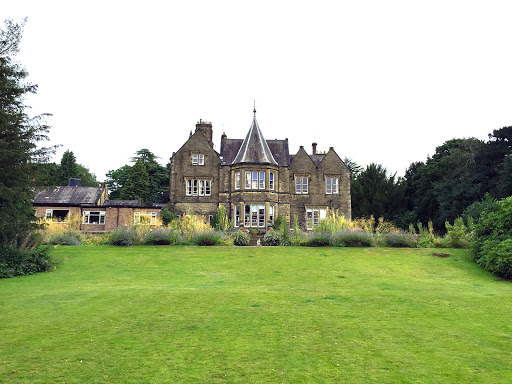
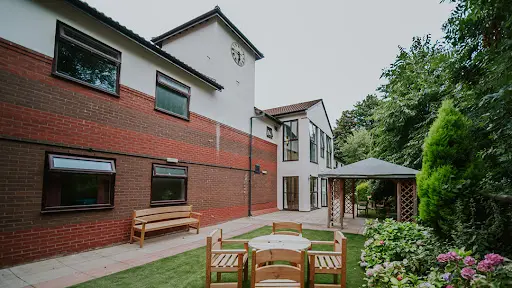
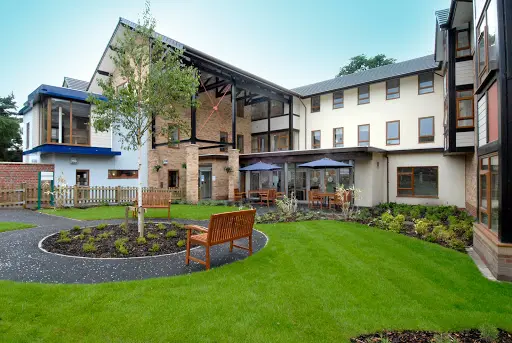
Each flat has its own kitchen and living area, letting residents eat when they want and entertain visitors privately. The bistro offers restaurant-style dining with menu choices for those who prefer company at mealtimes. Families particularly value the digital app that shares photos and updates, helping them stay connected and giving conversation starters for visits.
“For families navigating that difficult transition from home to residential care, Halecroft Grange offers a stepping stone that preserves independence within a supportive framework.”
DCC does not edit or curate content in this tab. For independently curated information, see The Evidence and DCC Verdict.